The problem
Sea turtles play important roles in keeping marine ecosystems healthy. However, centuries of overexploitation caused many populations around the world to disappear before their importance was fully realised or their ecological roles fully understood. Now, conservation efforts are focused not only on bringing turtles back, but also on understanding and restoring their ecological roles in today's altered habitats.
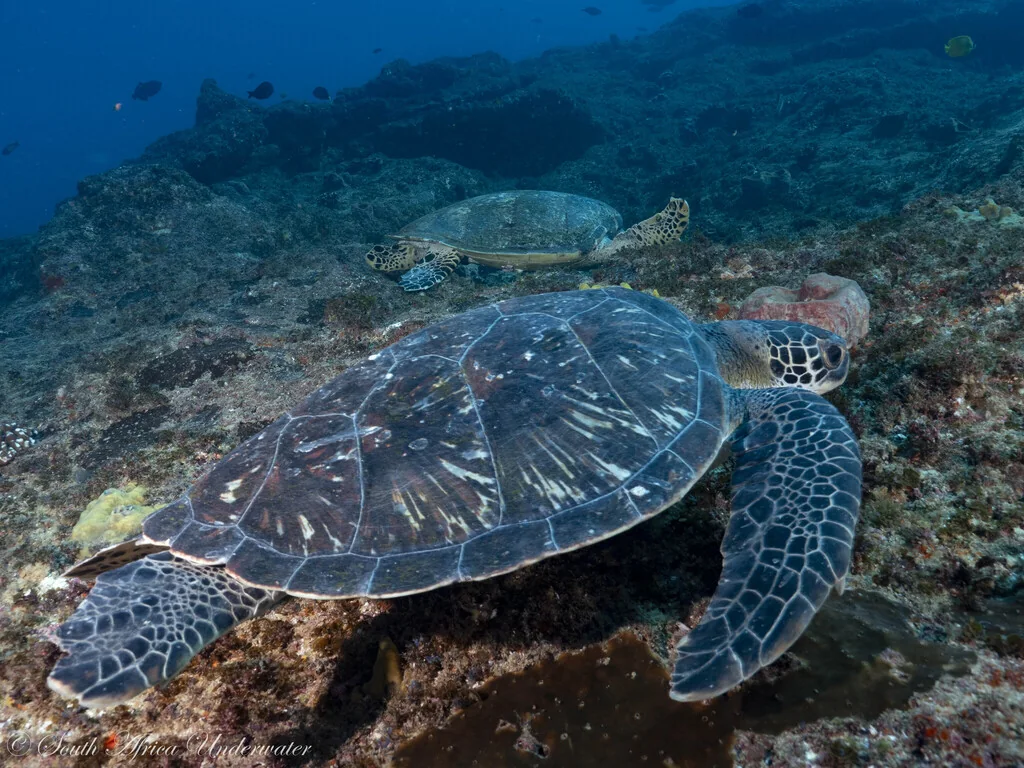
In South Africa, the loggerhead and leatherback turtles that nest on our beaches every summer have been studied for over 60 years. However, the green and hawksbill turtles that live quietly on our reefs year-round, where they spend decades shaping and maintaining these habitats, remain largely understudied.
The action and the science
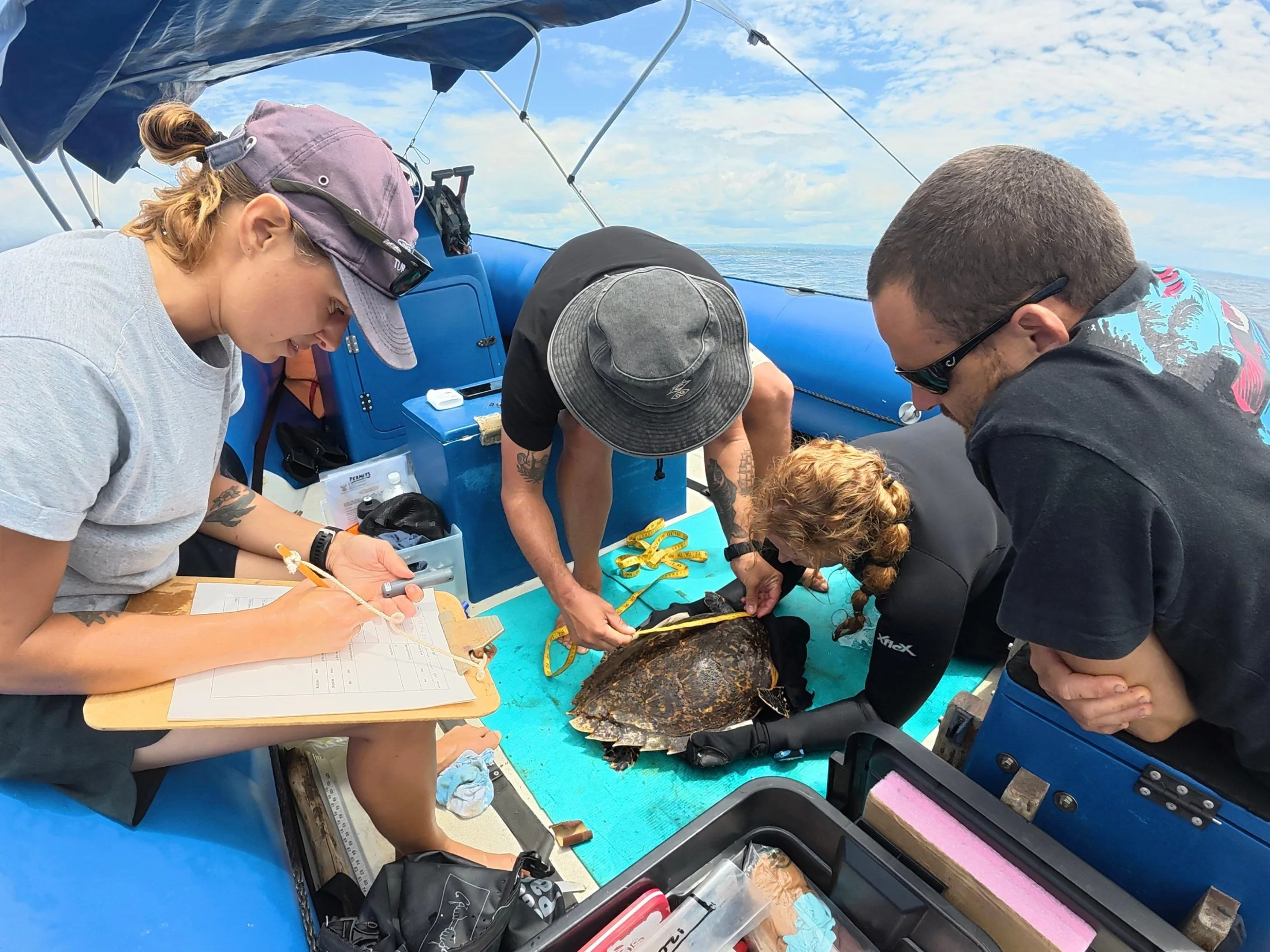
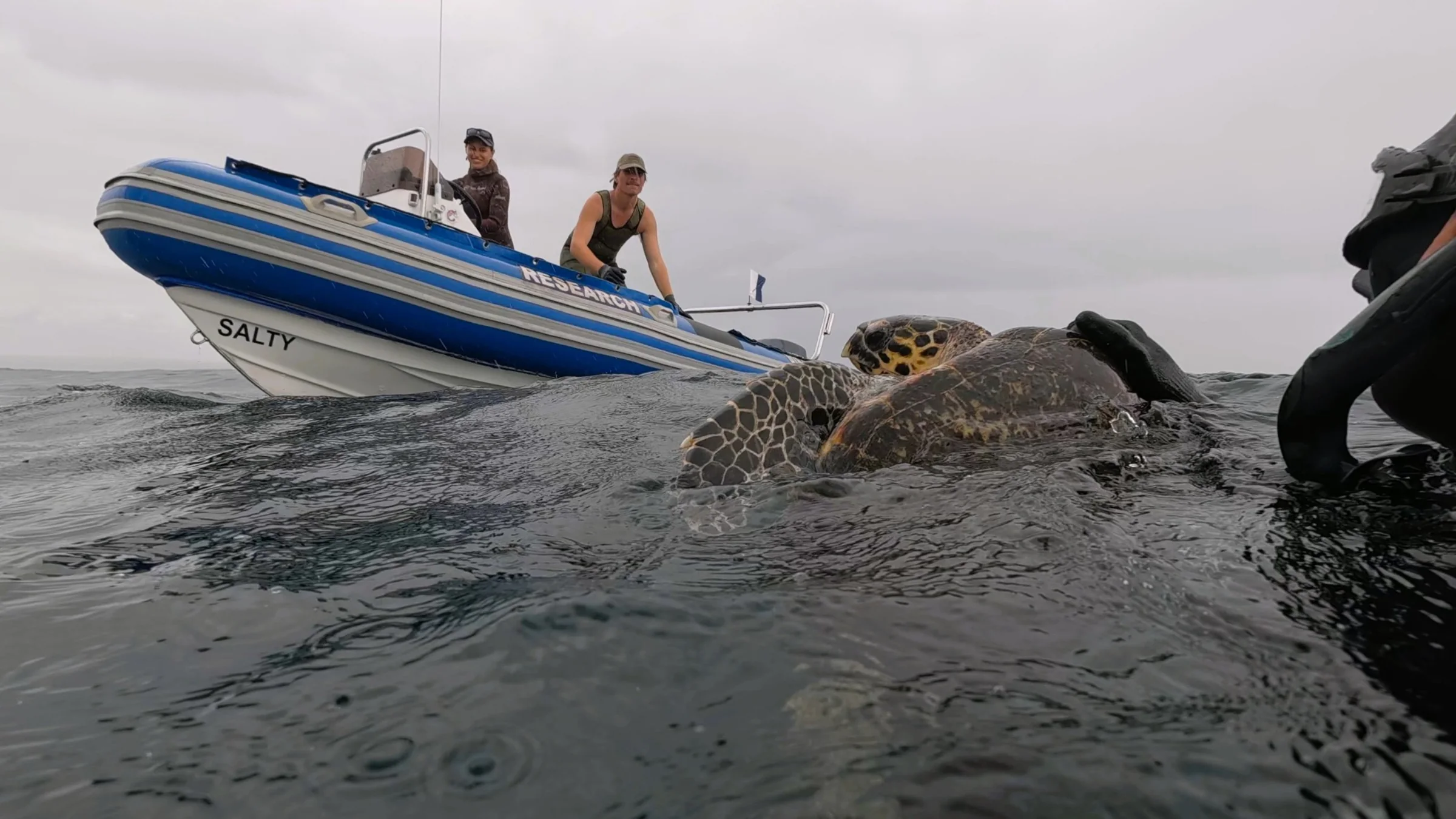
This Nelson Mandela University research project, led by PhD student Natalie dos Santos, is working to fill the knowledge gaps on Aliwal Shoal's sea turtles. The team uses genetics to determine where the turtles come from, photo-identification to monitor individuals and population trends over time, acoustic telemetry to track their movements, and underwater observations to catalogue what they eat and estimate their daily food intake.
Together, these approaches will help us understand how sea turtles interact with their environment, the ecological roles they fulfil, and what might happen to these ecosystems if sea turtles disappeared or their populations changed. Ultimately, this knowledge will help set more realistic and effective conservation targets, based on the population levels at which sea turtles can fulfil their ecological roles in today's habitats.
The impact
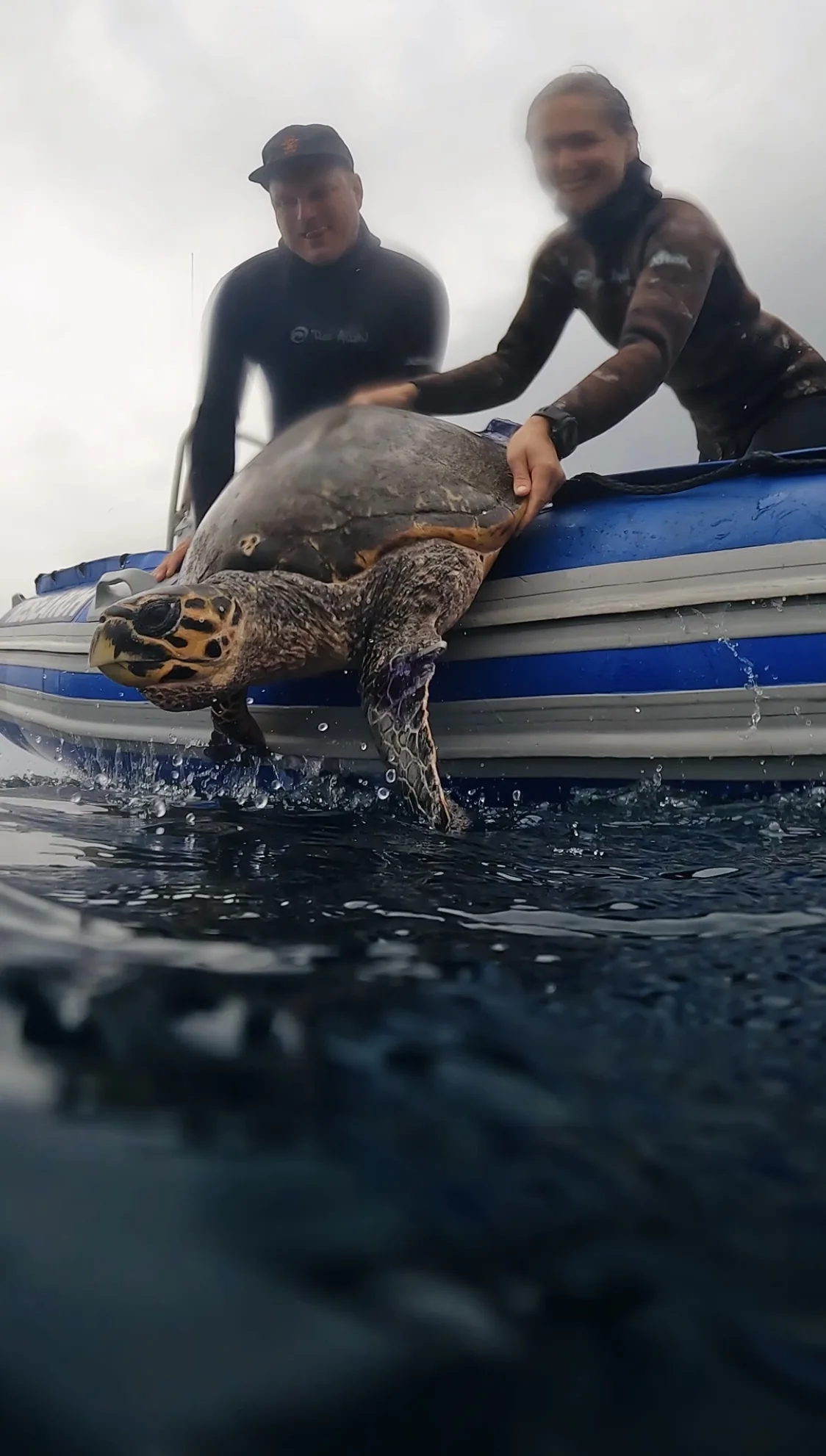
Over the past year, the team has acoustically tagged 22 turtles (6 green turtles and 16 hawksbills) and is gaining new insights into their movements around Aliwal Shoal. They have also collected genetic samples from 34 turtles, including loggerheads, to determine where they come from.
Since 2020, more than 1,000 sea turtle photos from Aliwal Shoal have been collected through research surveys and contributions from citizen scientists and interns (Sharkwise and Shark Research Unit). These have helped identify about 100 individual turtles on Aliwal Shoal, some of which are still seen regularly today.
The team is now working with computer scientists at Rhodes University to automate photo-identification and database management, so they can process more photos and learn even more about these animals over time.
Aliwal Shoal seems to be an important hotspot for hawksbills, offering hope for this Critically Endangered species.
How ocean users can help
- Share your turtle photos through saturtles.org to help monitor individuals over time.
- Support the fieldwork through the BackaBuddy campaign.
- Make better small, everyday choices to reduce your impact on the ocean: refill a reusable water bottle, carry reusable shopping bags, take your own coffee cup, recycle where possible, and think carefully about the waste you generate.
Every single effort makes a difference.