
Photo: Linda Ness
Getting to Know the Turtles of Aliwal Shoal
Nelson Mandela University researcher Natalie dos Santos is finding out where Aliwal Shoal's green turtles and hawksbills come from, where they go, and what they do for the reef.
South Africa's nesting turtles are some of the best studied in the world. Loggerheads and leatherbacks that come ashore every summer have been monitored for more than 60 years. The turtles that never leave are a different story.
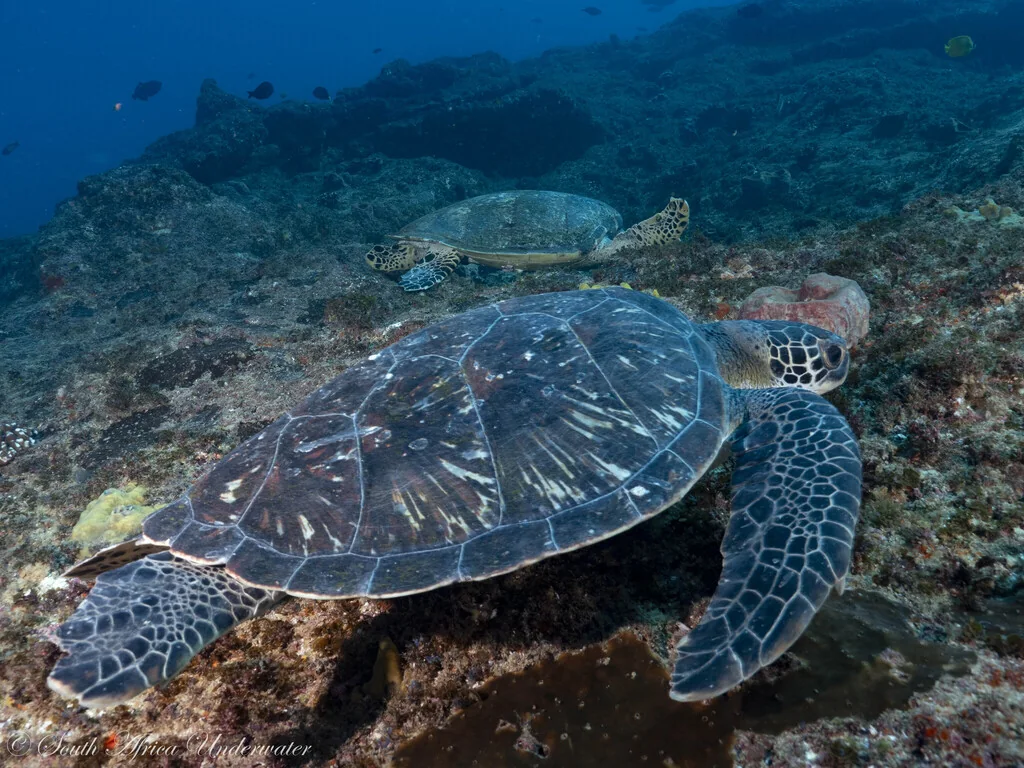
Green turtles and hawksbills live on our reefs year-round, often for decades, grazing and foraging in ways that shape the reef around them. Yet we know surprisingly little about them. That gap matters, because you cannot set a sensible conservation target for an animal when you don't know how many there are, where they come from, or what they do for their habitat.
Four ways of looking at one reef
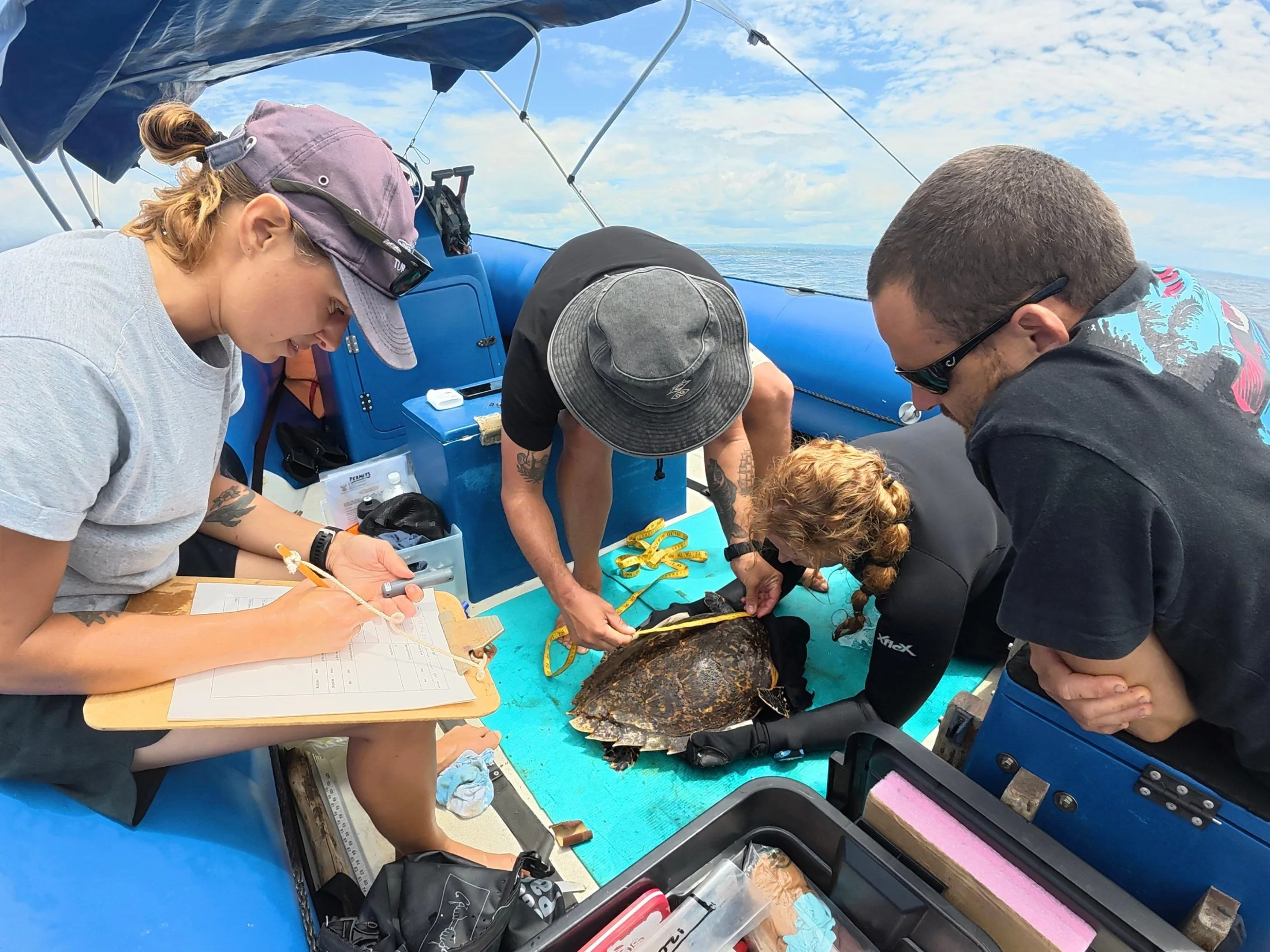
On Aliwal Shoal, off Umkomaas, Nelson Mandela University PhD student Natalie dos Santos is filling that gap with four complementary methods:
- Genetics, to work out where the turtles come from.
- Photo-identification, using each turtle's unique facial scales to recognise individuals and follow population trends over time.
- Acoustic telemetry, to track how the turtles move around the reef.
- Underwater observation, to record what they eat and estimate how much.
What the first results show
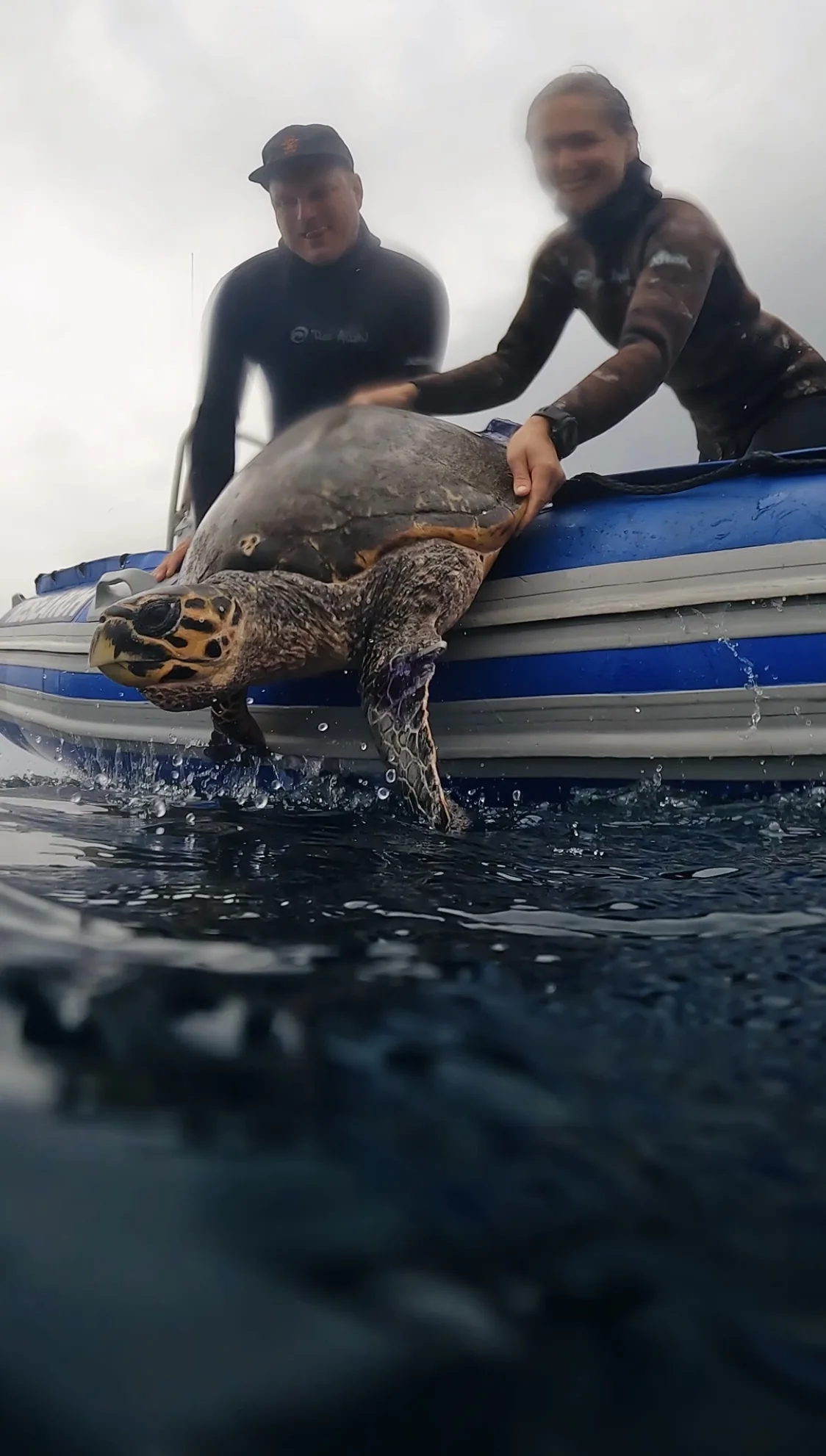
In the past year, the team has acoustically tagged 22 turtles, 6 green turtles and 16 hawksbills, and collected genetic samples from 34 turtles, including loggerheads.
Photos have been just as valuable. Since 2020, more than 1,000 turtle photos from Aliwal Shoal have come in from research surveys, citizen scientists and interns, helping to identify about 100 individual turtles. Some of them are still seen regularly today.
A study published in the journal Marine Biology in 2026 found that hawksbills were more common on Aliwal Shoal than at the iSimangaliso sites further north. Most were juveniles and subadults, and turtles that were seen again tended to stay close to where they were first recorded. Together, that points to Aliwal Shoal being an important long-term foraging ground, and a real source of hope for a Critically Endangered species.
Teaching computers to recognise turtles
Matching faces across a thousand photos by eye is slow work. The team is now working with computer scientists at Rhodes University to automate photo-identification and database management, so every photo submitted can be processed faster and tell us more.
How you can help
- If you dive or snorkel Aliwal Shoal, share your turtle photos through saturtles.org. Every clear side-on shot of a turtle's face can help identify an individual.
- Support the fieldwork through the BackaBuddy campaign.
- Make small, everyday choices that reduce what ends up in the sea: reusable bottles, bags and cups, and less single-use waste.